
Porady
How to Help Your Hydrangea Thrive During Hot Summer Days
Summer is the season when Magical Hydrangea truly shows its full beauty. The flowers continue to open, the colours develop and the plant brings months of atmosphere to your garden, terrace or balcony.
Warm summer days keep your hydrangea full of life. The flowers continue to unfold, the colours gradually change with the season and the plant draws energy from the sunlight. With the right care, you can support this natural growth and help your hydrangea continue to shine, even during warmer periods.
With a few simple care tips, you can help your hydrangea stay healthy and radiant throughout the summer.
A hydrangea that is wilting? Here’s what you can do
Have you noticed that your hydrangea looks a little droopy on a warm afternoon? Don’t worry. This is often a natural response to heat.
During the hottest moments of the day, a hydrangea may temporarily let its leaves and flowers droop to reduce moisture loss. Once the temperature drops and the plant can absorb enough water again, it will usually recover naturally.
Is your hydrangea still looking wilted at the end of a warm day? Then give it plenty of water at the base of the plant in the evening. Because the sun has gone down, the water has time to slowly reach the roots, allowing the hydrangea to recover during the night. Often, you will see the plant regain its fresh, strong appearance within just a few hours. In extreme heat, recovery may take until the following morning.
How to water your hydrangea properly on hot days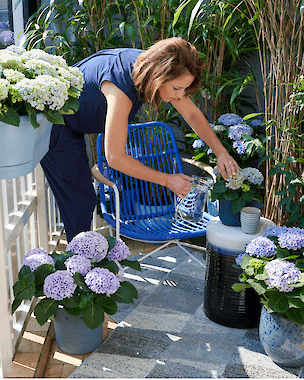
During warm summer days, a garden hydrangea needs regular watering. Heat causes moisture to evaporate more quickly, meaning the plant can dry out faster if the soil remains dry for too long.
Preferably water your hydrangea early in the morning or later in the evening, when the sun is less intense. This gives the water enough time to soak into the soil and allows the roots to absorb it effectively.
Always water at the base of the plant so the water reaches the roots directly. Regularly check whether the soil still feels slightly moist and avoid letting the soil dry out completely.
With the right watering routine, the roots remain active and you support healthy growth and a long-lasting flowering period.
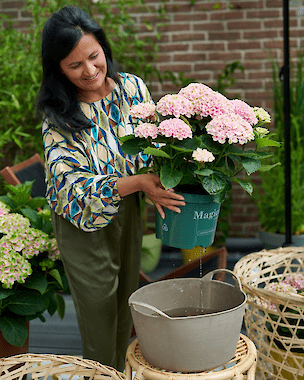 Does your hydrangea grow in a pot? Pay extra attention
A hydrangea in a pot often needs a little more care during warm periods than one planted in the ground. A pot heats up more quickly and contains less soil to retain moisture, causing the root ball to dry out faster.
Therefore, check the moisture level of the soil regularly. Does the soil feel dry? Then give enough water to make sure the entire root ball becomes moist again.
Has the root ball completely dried out? Soaking can be a good solution. Carefully place the pot in a bucket or container filled with water and leave it there for about fifteen minutes, until no more air bubbles rise to the surface. Allow the pot to drain well before placing the hydrangea back in its spot.
During the growing season, a potted hydrangea can also benefit from suitable plant nutrition. This helps keep the plant healthy and provides the energy it needs to develop new flowers.
The right location during warm summer days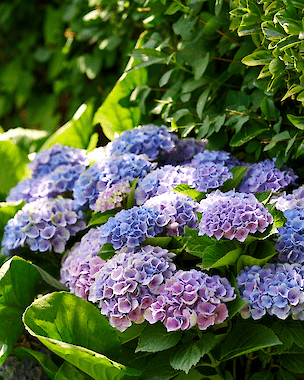
The location where your hydrangea grows outdoors also has a major influence on how well it handles warm days.
A spot with morning or evening sun is often ideal. This way, the hydrangea receives enough light without being exposed to the strongest midday sun for long periods.
Is your hydrangea in a sunny location? On hot days, you can provide extra protection with a parasol or by placing the plant among other garden plants that provide natural shade.
A good location helps the plant use its energy effectively for growth, flowering and colour development.
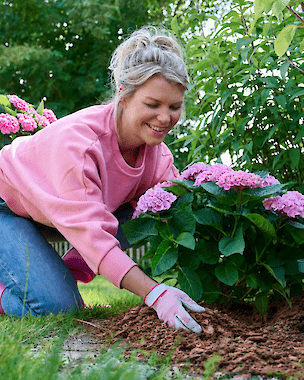 Don’t forget the roots
It is not only the flowers and leaves that deserve attention during warm days. The roots also play an important role in keeping your hydrangea healthy.
A layer of mulch, such as organic material or wood fibres around the plant, helps keep the soil moist and cooler for longer. This prevents the soil from drying out too quickly and creates more stable conditions around the roots.
In addition, natural ground cover supports soil life and contributes to a healthy soil structure.
Mulch remains valuable beyond the summer season as well. During winter, the layer provides natural protection against cold and temperature fluctuations. This keeps the roots better protected and helps your hydrangea enter the new growing season stronger.
Let your summer bloom
With the right hydrangea care, your plant will remain a beautiful addition to your outdoor space throughout the summer. Whether you enjoy a garden hydrangea in your garden, on your terrace or on your balcony, with the right attention the plant will stay healthy, strong and full of flowers.
Discover the different hydrangea varieties from Magical Hydrangea and find the flowering garden plant that perfectly suits your outdoor space.


