
Inspirasjon
Why does a hydrangea change colour? All about the colour transformation of Magical Hydrangea
Autumn has arrived. The days are getting shorter, the light is becoming softer and the first warm autumn colours are slowly appearing in the garden. Magical Hydrangea changes with the seasons too. The flowers that have brought colour to your garden all summer gradually develop deep green, red or grey-green tones.
Perhaps you can already see this transformation taking place in your own garden. But how can a hydrangea actually change colour? Why does this happen during the flowering period, and what role does daylight play?
The secret is in the flower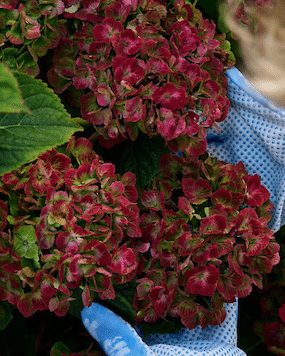
What we often call the petals of a hydrangea are actually sepals. These sepals contain natural colourants, also known as pigments. Together, these pigments determine the colour we see on the outside.
The sepals do not remain exactly the same throughout the long flowering period. As the flower continues to mature, the colour of the sepals changes too. As a result, a shade can gradually deepen, become greener or eventually develop dark red or grey-green tones, for example.
Daylight also plays an important role. Under the influence of light, the colour of Magical Hydrangea gradually changes. When the plant receives more light, its natural colour transformation may become more noticeable. So the hydrangea does not simply change colour because its original colour is fading. What you see is part of the flower’s continued development.
From the first colour to autumn
The colour transformation of Magical Hydrangea does not happen overnight. Every Magical goes through three different colour nuances during its long flowering period. In fact, this is one of the characteristics a hydrangea must have to carry the Magical name.
Around the transition from spring to summer, you will often see the fresh, bright colours with which Magical begins its flowering season, such as pink, blue, white or green. Towards the end of summer, the next colour nuance becomes increasingly visible. The original colour gradually changes and, for example, more green tones and red accents may begin to appear in the flowers.
Once autumn begins, the final colour nuance often becomes visible too. The colours deepen and take on a true autumnal feel, with shades such as dark green, deep red, burgundy and purple. This colour development can then continue well into autumn.
The exact colours you see vary depending on the Magical variety. Each variety has its own colour development, with the different colour stages gradually following one another.
Your Magical follows its own pace
Does your mother, neighbour or friend have the same Magical Hydrangea in their garden? That does not necessarily mean that both plants will be in the same colour phase at the same time.
Where a hydrangea is planted outdoors affects the conditions in which it grows. Whether it is planted in the ground or in a pot, the amount of daylight it receives, periods of warm weather, sufficient water and how the plant has come through the winter can all make a difference. These factors influence the plant’s growth and development.
So your Magical may already be showing its third colour nuance in full, while the same variety a few streets away remains in its previous colour phase for a little longer.
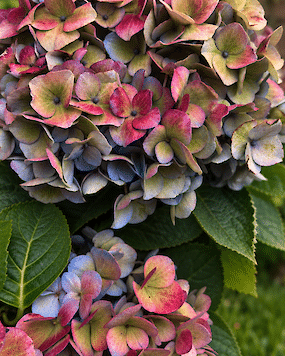 Multiple colour nuances on one plant
Colour transformation not only varies from plant to plant; even the flowers on a single Magical Hydrangea can change colour at different times. One flower may already have entered its next colour phase, while another flower on the same plant is still showing its earlier colour.
This means you can discover several colour nuances on a single Magical Hydrangea at the same time. Take a closer look at the different flowers on your plant. You may find different stages of the colour transformation right next to each other on the same plant.
Want to preserve that beautiful colour?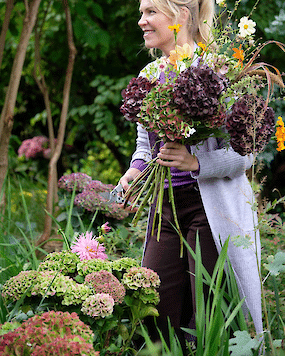
Sometimes a particular colour nuance is so beautiful that you would love to bring it indoors. Good news: you can!
Autumn is a wonderful time to dry hydrangea flowers, as the flowers have developed their beautiful seasonal colours by then. Cut a flower on a dry day and leave it to dry in a warm, dry and dark place. Glycerine can also help preserve the colour for longer.
Display the dried flowers in a vase, create an autumn bouquet or use them in a wreath. That way, you can continue enjoying indoors the colours that developed outside.
Want to know how to do it step by step?
Discover how to dry a Magical Hydrangea.
Take a closer look
The special character of Magical Hydrangea really reveals itself when you take the time to look more closely. Throughout the season, the flowers continue to change and new shades keep appearing.
So take another look at your Magical today. Which colours can you see? Have all the flowers reached the same stage? And which new shade might just be starting to appear?
Let yourself be surprised by the ever-changing colours and enjoy Magical Hydrangea well into autumn.


